


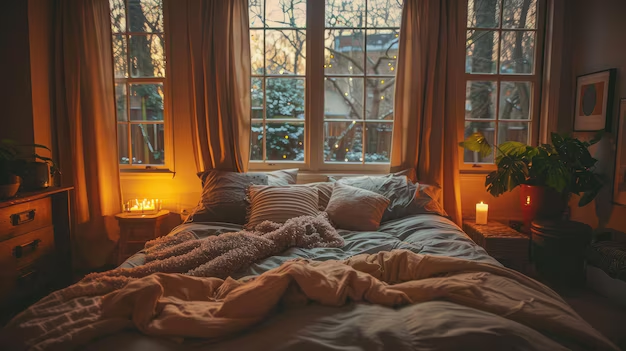
How to Create a Night Routine That Will Help You Thrive and Why Shorter Days Might Be Exactly What We NeedEmpty heading
When the afternoons begin their gentle slide into darkness, the collective groan begins: “Seriously… it’s dark already?” But what if we’ve been looking at it all wrong? What if the early darkness isn’t the enemy, what if it’s quietly trying to help us? At Health Designs, we see well-being as an ongoing conversation between you and the world around you. As the days grow shorter, they invite you to slow down, recalibrate, and build nighttime routines that renew your energy and strengthen your health.
Why the Early Darkness Might Be Good for Us
Light is one of our strongest circadian rhythm cues, it literally tells our brain when to be alert and when to wind down. As daylight shortens, the extra darkness gives your body a natural boost in melatonin production. Harvard Health Publishing notes that even small amounts of evening light can hold melatonin back, while true darkness lets it rise and supports deeper, more restorative sleep.
Empty headinight is one of our strongest circadian rhythm cues, it literally tells our brain when to be alert and when to wind down. As daylight shortens, the extra darkness gives your body a natural boost in melatonin production. Harvard Health Publishing notes that even small amounts of evening light can hold melatonin back, while true darkness lets it rise and supports deeper, more restorative sleep.
Contrary to the “grind culture” mentality, rest is productivity. The CDC has repeatedly emphasized that adults need at minimum 7 or more hours of sleep per night for optimal health. When fall and winter nudge us toward slowing down, it’s not a hindrance, it’s biology offering balance.
A Night Routine That (Actually) Works
If you’re craving steadier energy, better mood, or simply a smoother evening, here’s a simple, evidence-backed routine inspired by guidance from the National Sleep Foundation and research from the National Library of Medicine.
Empty heading you’re craving steadier energy, better mood, or simply a smoother evening, here’s a simple, evidence-backed routine inspired by guidance from the National Sleep Foundation and research from the National Library of Medicine.
A consistent wake time is one of the strongest anchors for your internal clock. This stability makes falling asleep at night easier. Also, aim for a bedtime that gives you 7+ hours.
Light at night suppresses melatonin, even dim light. Swap bright overheads for lamps, amber bulbs, or low-power lamps. Switching to softer, warmer light sends a clear message to your brain that it is time to transition for rest. Avoid using your phone or technology before bed, as blue lights disrupt your circadian rhythm as well.
Not seven. Not five. One.
A warm shower (scheduled about 60–90 minutes before bed so the post-shower body cooling triggers sleepiness), a good book, or a journal entry is enough. Ritual over routine creates consistency that sticks.
Your body temperature naturally dips at night, and a cooler room supports that process. Darkness helps melatonin and minimizing noise limits nighttime awakenings. Sleep masks, blackout curtains, or a white noise machine are small investments with big returns.
According to the National Sleep Foundation, caffeine can disrupt sleep for up to six hours. Avoid drinking it after mid-afternoon if you’re sensitive. Aim for earlier dinners to ensure plenty of time for digestion and, when possible, earlier workouts to avoid alertness spikes at the wrong time.
This is a cornerstone of Cognitive Behavioral Therapy for Insomnia (CBT-I), which research shows is the most effective long-term treatment for sleep difficulties. Get up, do something calm in low light, and return only when sleepy. This retrains the brain to associate the bed with… well, sleep.
A Simple “Early Darkness” Checklist
Empty heading
Try one this week:
- Keep a consistent wake time
- Dim lights and screens 60 minutes before bed
- Choose a single nightly ritual
- Cool the bedroom and eliminate light
- Consume caffeine earlier in the day
- Practice the “get out of bed if frustrated” rule
Small shifts add up. And fall and winter? They’re an invitation, not an inconvenience.
Closing ReflectionsEmpty heading
Shorter days create space to rebuild healthier habits, strengthen your sleep, and reclaim your evenings. When you align with the season instead of resisting it, you create a rhythm that fuels you long after winter ends.